
what is happening?
Estimated reading time: 5 minutes.
50 farms.
6 regions affected.
Millions of animals culled.
Hundreds of thousands of euros that we are all paying to fund containment operations and compensate farmers.
The Highly Pathogenic Avian Influenza (HPAI) virus is wreaking havoc on farms in central and northern Italy.
Did you know?
Yes. It is rarely discussed, perhaps not enough, but the HPAI virus is spreading rapidly: between September 6 and November 28, 2025, 442 outbreaks were reported in domestic birds and 2,454 in wild birds across 29 European countries, according to the latest quarterly report by the European Food Safety Authority (EFSA), the European Centre for Disease Prevention and Control (ECDC), and the EU Reference Laboratory (EURL). Precisely in the period under review, the number of wild birds affected by HPAI reached its highest level since 2016: waterbirds (particularly ducks, geese, and swans) were the most affected, paralleled by massive mortality cases among common cranes.¹
Almost all cases detected in Europe are linked to a new variant of a specific genotype A(H5N1) of HPAI that had already circulated on the continent. Following this massive incidence, EFSA recommended strengthening surveillance for early diagnosis and ensuring strict biosecurity on farms to prevent further spread of the virus among domestic poultry.²
But the situation has not improved at all; within less than a month, 60 new outbreaks of Highly Pathogenic Avian Influenza were notified to the European Commission.³
And Italy turns out to be one of the most affected countries
Lombardy, Veneto, Emilia-Romagna, Piedmont, Tuscany, and Friuli-Venezia Giulia. It is in these central and northern Italian regions that the A(H5N1) virus has proliferated, affecting more than 50 farms from September 2025 to today.
Since there is currently no cure, European regulations provide for stamping out to prevent its spread. This technical term indicates the culling of all animals present at the affected site, which, in most cases, is carried out using gases such as CO₂ or nitrogen. These intervention methods are considered the most “efficient” when dealing with such high numbers. They are mandated by Regulation (EC) No. 1099/2009, which requires minimizing pain, distress, and suffering to animals during containment operations.
But is it really so?
With the investigation carried out in collaboration with Giulia Innocenzi and Food For Profit, aired on Sunday, February 1st on the Report program (Rai3), we analyzed some of these practices implemented during the depopulation phases in several farms in northern Italy. Systematic violations emerged, raising urgent questions about the effectiveness of applied protocols and the use of public funds allocated for this emergency.
Lethal gas slowly fills the barn
The images shown in the Report episode are exclusive; for the first time in Italy, it has been possible to see what happens inside a poultry shed where the gas stamping out procedure is underway. And, above all, to understand what the animals endure in the time leading up to their death.
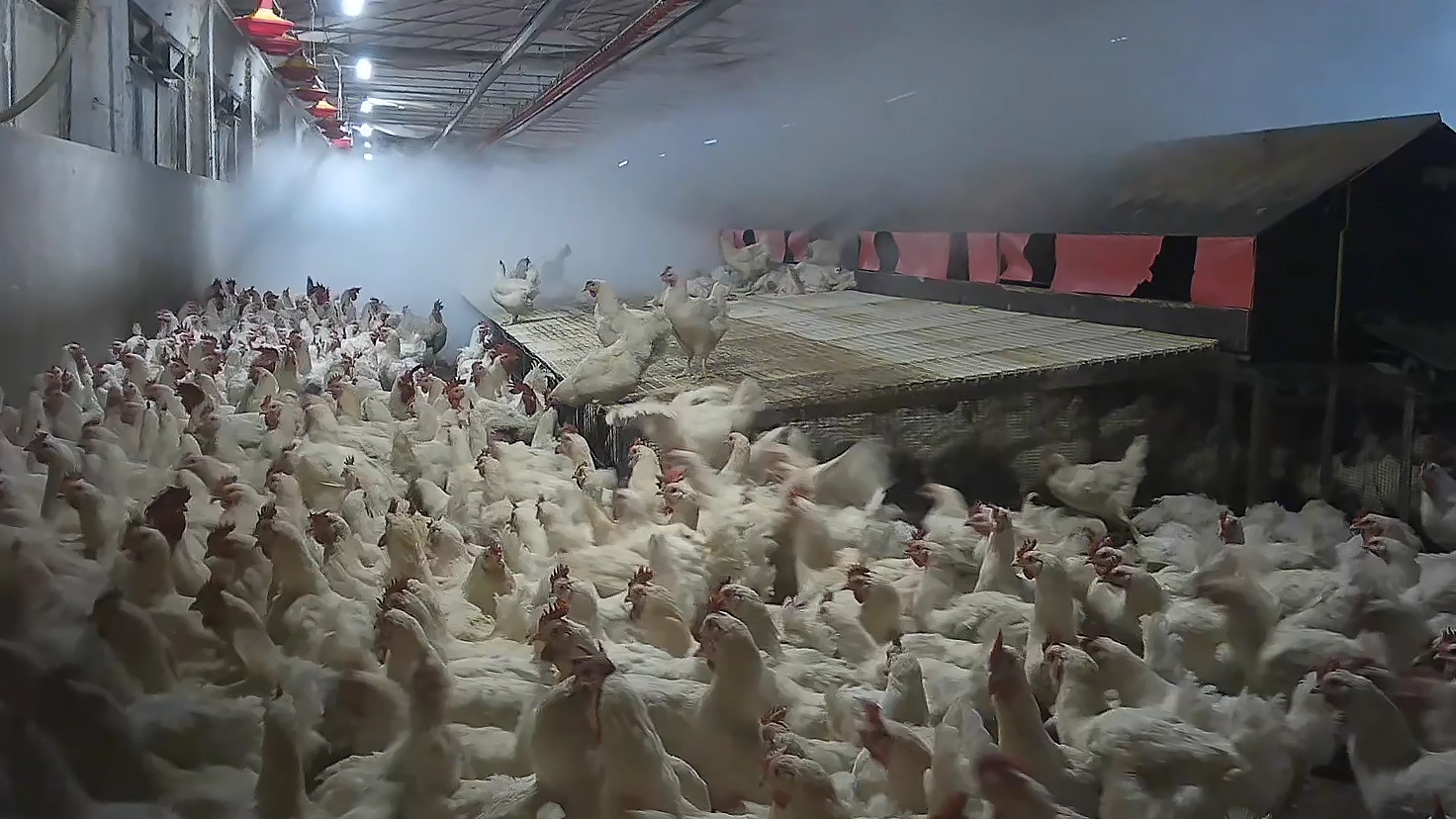
When the gas is injected into the barn, the hens, visibly disoriented and frightened, push towards the back, huddling against each other.
Rapidly, the view becomes completely white; nothing is visible anymore, but one can hear desperate clucking and violent wing flapping.
Ten minutes pass before silence falls, and when the fog clears, a carpet of white feathers, beaks, and legs begins to appear.
The animals, after a long agony, are all dead.
At this point, workers enter with wheelbarrows to collect the carcasses, which will then be disposed of in specific incinerators.
Gas culling, often used for poultry and pigs, causes death by hypoxic asphyxia (lack of oxygen) through the inhalation of high doses of CO₂ or nitrogen. Animals, closed in containers or inside sealed sheds, lose consciousness due to the anesthesia induced by the gas, but the procedure can cause severe stress and suffering before death. Although the method aims to stun the animal, the induction phase can induce “gasping” and convulsions, indicating that consciousness might persist during the onset of suffocation.
Exactly as in the case we are discussing, where findings showed that the hens struggled for a full 10 minutes before dying.
When gas fails, sticks arrive
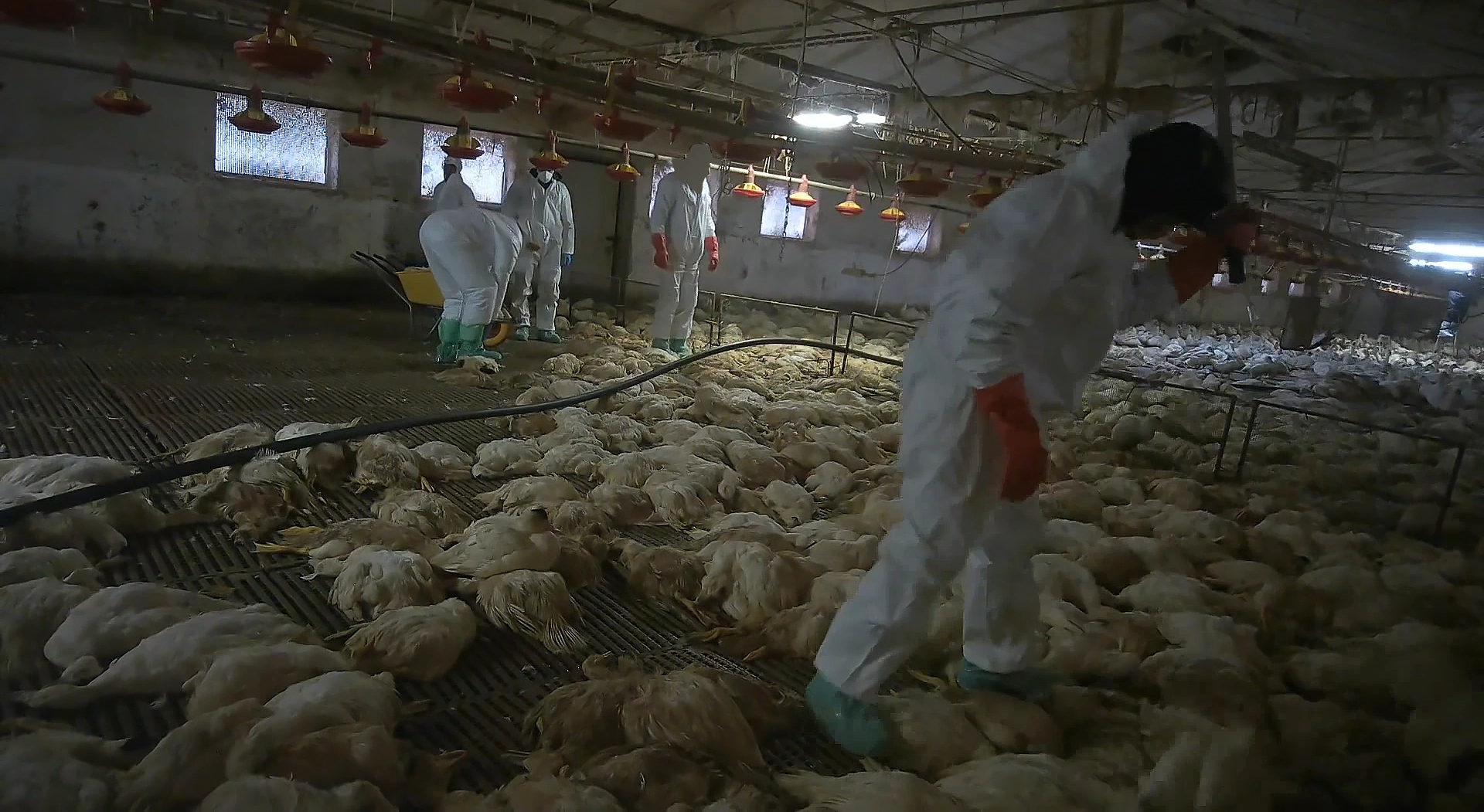
A duck farm was hit by the avian flu epidemic raging in the area, and depopulation operations began.
We managed to reconstruct what happened after the gas injection inside one of the sheds and demonstrate the critical issues that occurred during the work.
The animals should have all, or mostly, died from hypoxia following nitrogen inhalation. But it immediately becomes evident that something went wrong; many ducks remained alive, and the reason seems to be linked to one of the pipes discharging gas into the shed which, on that occasion, failed to function.
From some information obtained, there seemed to be a cost-saving policy regarding the gas, which would have led workers to use less of it and, consequently, reduce its effectiveness.
What is described as the owner’s son asserts that, in his opinion, everything went smoothly and that the intervening team respected all animal welfare regulations.
The findings, however, outline a very different situation where heavy critical issues emerged, especially related to several episodes of violence against animals, some of which appear to constitute crimes of mistreatment. All this would have occurred under the eyes of the public veterinarian deputized to supervise the operations.
The surviving ducks, despite numbering around 400 — a number for which it would have been better to use nitrogen again—were killed with sticks or via cervical dislocation. Methods to be used exclusively as a last resort and by trained personnel.
The staff of the cooperative contracted to carry out the depopulation operations, instead, do not seem to know how to perform the procedures correctly and are caught on multiple occasions inflicting multiple blows on individual animals without killing them, senselessly prolonging their agony.
Even cervical dislocation is not performed in the way that, according to Dr. Dario Buffoli, veterinarian and technical consultant for the judicial police, would be the most correct:
“The best dislocation occurs with the stretching of the cervical vertebrae“.
Instead, in the analyzed videos, a twisting of the neck is applied, which often leaves the ducks agonizing for a long time. Among the cases that shocked us most was one where the veterinarian himself, intervening to show a worker the correct execution, places his foot on a duck and pulls its neck, failing to kill it. He therefore intervenes a second time, twisting it and throwing the bird towards a wheelbarrow where carcasses are being collected. He misses the target, and the animal, still alive, collapses to the ground. At this point, the veterinarian picks it up and strikes it three more times before finally managing to kill it.
“Killing animals may induce pain, distress, fear or other forms of suffering to the animals even under the best available technical conditions. Certain operations related to the killing may be stressful and any stunning technique presents certain drawbacks. Business operators or any person involved in the killing of animals should take the necessary measures to avoid pain and minimise the distress and suffering of animals during the slaughtering or killing process, taking into account the best practices in the field and the methods permitted under this Regulation. Therefore, pain, distress or suffering should be considered as avoidable when business operators or any person involved in the killing of animals breach one of the requirements of this Regulation or use permitted practices contrary to the rules laid down therein” – Regulation (EC) No. 1099/2009
It is then decided to gather the animals on one side of the shed, which is closed off with fences. During the movement, the ducks are kicked, grabbed by the wings, then by the legs, and literally thrown; in addition to causing pain, this type of handling risks causing fractures and injuries and is attributable to the crime of mistreatment (Art. 544-ter of the Penal Code).
For about thirty minutes, what Dr. Buffoli defines as a “slaughter” takes place: workers proceed to beat the animals to death. The animals, frightened and stressed, try to flee while watching their conspecifics die. Even in this case, Regulation (EC) No. 1099/2009 is violated, which states that interaction should be avoided as it could cause harmful effects on welfare (point f of Chapter II, Article 3).⁴
The company that won the contract to manage the avian flu emergency in Lombardy, Veneto, and Emilia-Romagna, and which specifically coordinated the stamping out in this farm, is the same one that, just a couple of years ago, was at the center of a previous Report investigation. During the African Swine Fever epidemic, 10,000 pigs were killed with electric prods at an affected site.⁵ The case caused enormous outrage due to the particular ferocity of some scenes, and a parliamentary inquiry was launched regarding it. The company in question has collected more than 13 million euros since 2020 to carry out containment work for the A(H5N1) virus in the regions mentioned above.
A poorly maintained tarp
To counter the spread of avian flu, it is fundamental to strictly respect biosecurity protocols, but what has been reconstructed outlines a picture that is anything but reassuring.
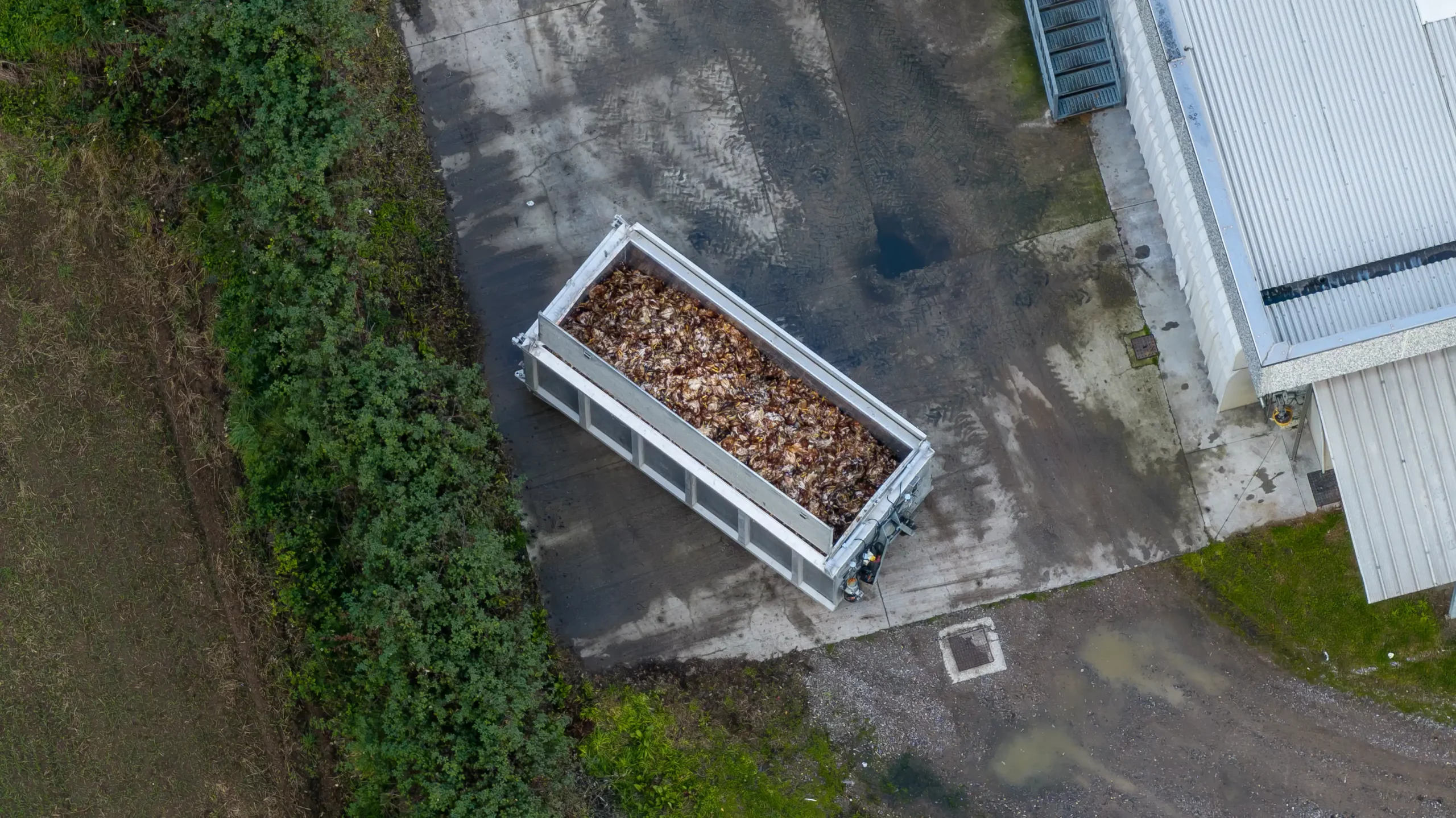
In a laying hen farm hit by avian influenza and subjected to the depopulation procedure, carcasses were documented left outside the structure, poorly covered and only partially by a tarp, and unguarded.
This fact represents a serious violation in terms of biosecurity, as infected remains, exposed to the environment, could come into contact with wildlife, which could potentially become a vector allowing the virus to spread further across the territory.
Thanks to a FOIA request by the Food For Profit network, we know that from 2020 to 2025 in Italy, the regions of Veneto, Lombardy, and Emilia-Romagna alone allocated 266 million euros for culling and farmer compensation. This is a conservative estimate because Lombardy did not provide the totality of the requested data.
The epidemic is still ongoing, as evidenced by data released by the Zooprophylactic Institute, and we do not know if or when it will stop spreading.⁶
What we do know is that, despite previous incidents and notwithstanding promises made by some subjects involved in the investigation, once again, the attempt is to contain an emergency rather than work preventively on what generates it.
As long as we support the current food model, based on mega-production and excessive consumption, we will continue to roll out the red carpet for viruses like African Swine Fever, Avian Flu, Blue Tongue, or the next one that arrives, which will obviously find a perfect habitat to proliferate in farms.
And we will accept to pay out of our own pockets for the barbarities we have seen.
How it ended
The Report episode broadcasting the investigation was watched by over 1.5 million people. The issue will be the focus of a parliamentary inquiry by MP Eleonora Evi, who commented on social media following the broadcast: “It is an emergency, but when only money counts, savings are made on everything—even on the gas to kill the animals, on disinfectant powder. And once again, those paying the price for our sick, crazy food industry, which is nonetheless generously compensated with public funds, are the animals. They are beaten with sticks and left to die in agony under the eyes of veterinarians who are supposed to be supervising”.
On February 2nd, Paola Pollini, spokesperson for the Five Star Movement, requested that Guido Bertolaso, Councilor for Welfare, report to the assembly regarding the events documented by the Report broadcast concerning the operations of ATS Valpadana.
ATS Valpadana, a few days after the broadcast, announced that internal verifications had been launched regarding the implemented procedures and compliance with regulations. It was specified that the inspections would also cover the disinfection methods of the facilities and, specifically, the quantity of disinfectant (Virkon) used by the company at the end of the depopulation operations.
On February 6th, the FNOVI (National Federation of Italian Veterinary Medical Associations) requested an official clarification from the competent health authorities regarding the incident, stating: “The protection of animal welfare, even in complex emergency contexts, constitutes an essential principle of public health action and the professional responsibility of veterinary surgeons.”